Clean concrete and equipment in any season. Degreaser Pro in Montana with cold-weather performance and honest guidance for industrial and commercial cleaning.
Your shop floor is covered in hydraulic fluid stains that have been there since last winter. The concrete apron outside your bay doors has turned dark with years of oil and grease buildup from trucks and heavy equipment. You’ve tried pressure washing, you’ve tried the big-box store cleaners, and the stains always come back within a week. Degreaser Pro in Montana is the heavy-duty concrete cleaner that actually handles the oil, grease, and hydrocarbon stains that standard products barely touch. At Montana Concrete, we’ve seen enough failed cleaning attempts across the state to know what separates a product that works from one that just smells like chemicals.
What Degreaser Pro Actually Does
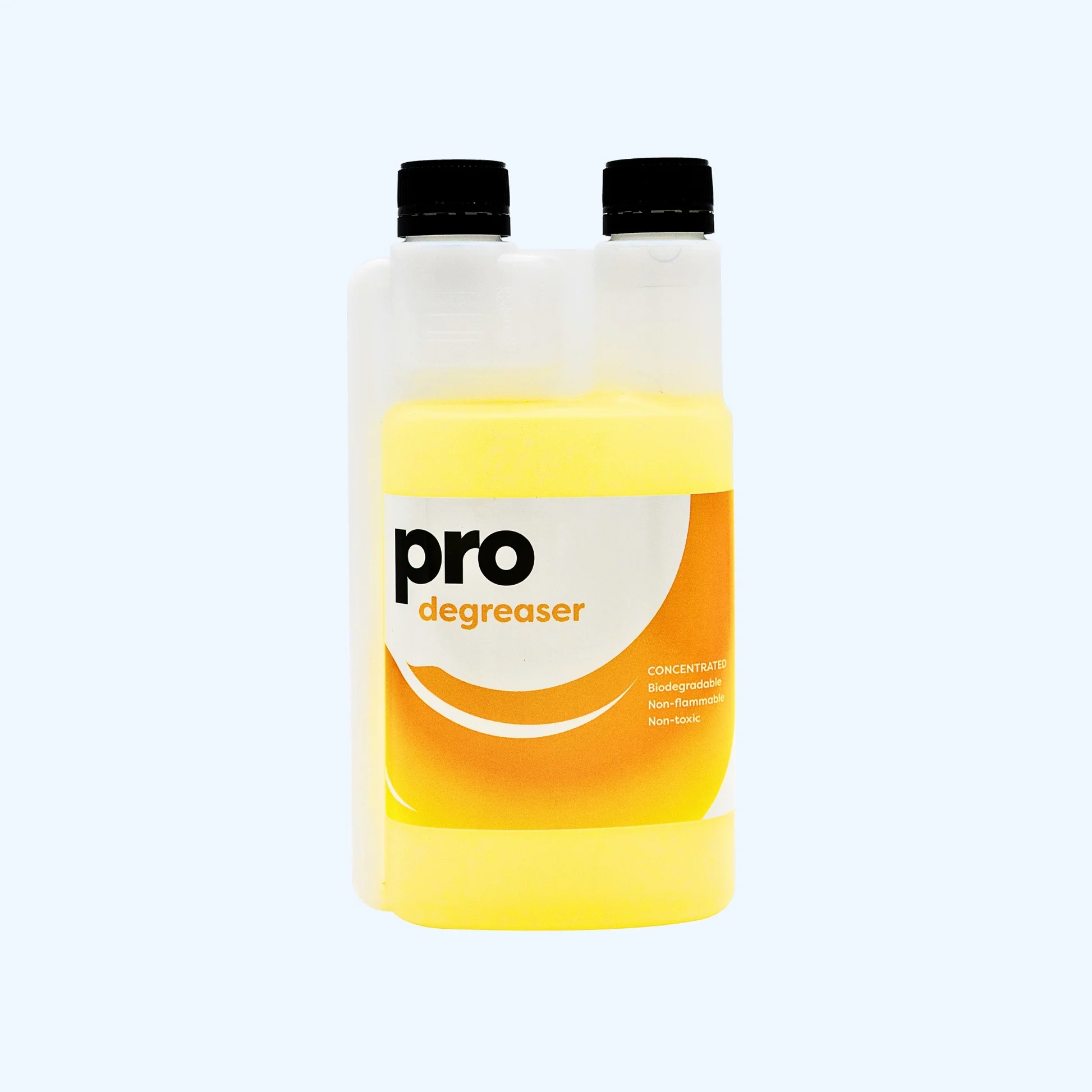
Degreaser Pro is an alkaline-based concrete degreaser scientifically formulated to emulsify and lift oil, grease, and hydrocarbon-based stains from concrete, masonry, and industrial surfaces. The alkaline chemistry breaks the bond between petroleum contaminants and the porous concrete substrate, suspending the oil in a water-soluble emulsion that rinses away with standard pressure washing or scrubbing. It works on fresh spills, baked-on grease from hot equipment, and years-old stains that have penetrated deep into the concrete pores.
The formulation addresses the specific challenges of industrial concrete cleaning: oil from hydraulic systems, grease from bearings and joints, diesel and gasoline residue, tire marks, and the ground-in dirt that accumulates in high-traffic shop environments. Unlike solvent-based cleaners that simply dissolve surface oil and allow it to redeposit, alkaline degreasers chemically alter the oil’s structure so it can be rinsed away completely rather than pushed deeper into the concrete.
In Montana, we’ve noticed that most contractors and shop owners treat concrete cleaning as an afterthought — something to address when the floor gets too dirty to ignore. That approach costs more in the long run. Oil-soaked concrete becomes a slip hazard, a fire risk, and an environmental liability. Contaminated runoff from pressure washing oil-stained concrete can violate EPA stormwater regulations. And the longer stains sit, the deeper they penetrate, making removal exponentially more difficult. A quarterly cleaning schedule with the right product prevents the buildup that turns a routine job into a restoration project.
The Real Challenge in Montana
Montana’s climate creates conditions that most degreasers weren’t designed for. Winters drop below zero for weeks at a time, with shop floors and outdoor aprons often hovering near freezing even inside partially heated bays. Summer days push into the 90s, baking grease into concrete and accelerating evaporation that leaves concentrated residue. The temperature swings between seasons stress both the concrete and the contaminants bonded to it. Many water-based degreasers lose effectiveness in cold water, and solvent-based products can freeze in storage or create hazardous fumes in enclosed winter workspaces.
The state’s economy runs on industries that generate serious grease and oil: agriculture with combines and tractors, mining with heavy equipment, logging with skidders and loaders, trucking along I-90 and I-94, and oil and gas operations in the eastern counties. Each of these industries produces concrete contamination that standard household cleaners can’t touch. The combination of heavy soil loads and extreme temperature variation means Montana contractors need a degreaser that performs across the full annual range, not just in moderate conditions.
A client in Billings reached out when their fleet maintenance bay had become a safety issue. Years of diesel and hydraulic fluid buildup had created a floor so slick that two mechanics had slipped in a single month. Their previous cleaning attempts used a solvent-based product that removed surface oil but left the deep penetration untouched. The solvent also evaporated too quickly in their heated shop, creating fumes that triggered the ventilation alarm. We applied Degreaser Pro with a 10-minute dwell time, agitated with a rotary floor scrubber, and rinsed with hot water. The floor returned to near-original concrete color, and the traction improved immediately. They now clean quarterly and haven’t had a slip incident since.
The objection most competitors ignore: “Will this actually work in cold weather, or am I wasting money on a product that freezes in my shop?” Affordable Degreaser Pro in Montana is available, but the real value question is whether the product performs when you actually need it. Many degreasers formulated for moderate climates thicken, separate, or lose emulsifying power when temperatures drop below 40 degrees. The gap in the market is honest performance data — products that specify their effective temperature range and storage requirements so contractors don’t discover limitations when it’s already too late.
How Montana Concrete Approaches It Differently
Most chemical suppliers in the region treat degreasers as commodity products: stock the standard formula, sell by the drum, and move on. We don’t work that way. Every client conversation starts with understanding their specific contamination profile, application environment, and cleanup requirements. A mining operation in Butte faces different challenges than a food processing plant in Missoula or an auto shop in Great Falls. The product recommendation, dilution ratio, dwell time, and application method all adjust based on these factors.
Professional Degreaser Pro in Montana means providing application guidance that accounts for local conditions. In heated shops, we recommend standard dilution with hot water for maximum emulsification. In unheated or partially heated spaces during winter, we adjust the concentration and dwell time to compensate for reduced chemical activity at lower temperatures. For outdoor applications, we factor in wind chill, surface temperature, and the risk of freezing rinse water. We also advise on containment and disposal — Montana’s environmental regulations require proper handling of petroleum-contaminated wastewater, and we help clients set up simple containment systems that keep them compliant.
Here is the insight most generic articles never mention: your concrete’s age and finish dramatically affect degreaser performance, and most suppliers never ask about it. Newly poured concrete is highly porous and absorbs oil deeply, making stains harder to remove even with strong chemistry. Older concrete that has been sealed or polished has a denser surface that resists penetration but may have micro-cracks where oil has collected over years. A one-size-fits-all application method fails on both surfaces. We specify different approaches — longer dwell times and higher concentration for new porous concrete, mechanical agitation and repeated lighter applications for sealed or polished floors. This customization is what separates effective cleaning from surface-level washing.
Practical Tips: What to Know Before You Decide
If you are comparing degreaser products, ask specifically about the effective temperature range, whether the formulation works in cold water, what the recommended dwell time is for your contamination type, and how the emulsified waste should be contained and disposed of. Any supplier who can’t answer these questions or who claims their product “works in all conditions” is either uninformed or overselling. Chemistry has temperature dependencies, and honest suppliers acknowledge them.
Working with clients in Montana, our team found that contractors who get the best long-term results are the ones who treat concrete cleaning as preventive maintenance rather than emergency response. A quarterly application of Degreaser Pro on high-traffic areas prevents the deep penetration that makes old stains nearly impossible to remove. They also invest in simple containment — berms, sumps, or vacuum recovery systems — that capture oily wastewater before it reaches storm drains. The upfront cost of containment pays for itself in avoiding EPA fines and reduced product consumption, since contained water can be filtered and reused.
One local market-specific tip: Montana’s hard water — common in municipal supplies across the state — can reduce degreaser effectiveness by reacting with the alkaline chemistry and forming mineral deposits on the concrete surface. If your rinse water leaves a white residue after cleaning, your water hardness is interfering with the chemistry. Adding a simple water softener to your rinse system, or using a chelating agent in your cleaning solution, eliminates this problem and improves results significantly. Most suppliers never mention this because they don’t test their products with Montana water chemistry.
Trusted Degreaser Pro in Montana comes down to three things: a formulation that performs across the state’s temperature range, application guidance customized to your specific contamination and concrete conditions, and honest advice about containment and disposal. If a product seems too cheap to be effective, it usually is — diluted formulas, weak surfactant packages, or chemistry that works only in ideal conditions.
Why Your Concrete Deserves More Than a Surface Wash
The difference between a shop floor that stays clean and one that returns to stained and slippery within weeks isn’t the pressure washer — it’s the chemistry and method that went into the cleaning. Montana’s extreme temperature range, heavy industrial soils, and hard water punish shortcuts harder than moderate climates. A degreaser that works in a California warehouse may fail completely in a Billings winter or a Kalispell summer.
Conclusion
If your concrete is stained with years of oil and grease buildup, or if you are tired of cleaning efforts that barely scratch the surface, the question isn’t whether to use a stronger product — it’s whether you trust the supplier to tell you how to use it correctly for your conditions. Montana Concrete provides Degreaser Pro in Montana with the application guidance, temperature-specific protocols, and disposal advice that match what contractors and shop owners across the state actually need. Request a free site evaluation and we’ll show you exactly what your concrete requires to get clean and stay clean.
FAQs
How much does Degreaser Pro cost in Montana?
Concentrated Degreaser Pro typically runs $25–$45 per gallon depending on order volume, with bulk drum pricing available for large operations. At standard dilution ratios of 1:4 to 1:10, a single gallon covers 500–1,000 square feet. The real cost savings come from proper application that prevents re-treatment, not from buying the cheapest product.
How do I know a concrete cleaning supplier is legitimate and qualified?
Ask for product data sheets showing pH, active ingredients, temperature range, and EPA registration. Qualified suppliers explain application methods for your specific contamination, provide dilution guidance, and advise on containment requirements. Vague claims about “industrial strength” without specifics are a warning sign.
Does Degreaser Pro work in cold weather?
Yes, but performance varies with temperature. The alkaline chemistry remains active in cold water, though dwell time should extend to 15–20 minutes and concentration may need adjustment. Storage above 40 degrees prevents separation. For sub-freezing applications, heated water and enclosed spaces improve results significantly.
How do I dispose of oily wastewater after degreasing?
Montana follows federal EPA guidelines for petroleum-contaminated wastewater. Collect rinse water in a sump or vacuum recovery system. Small quantities can often be disposed of through approved waste haulers. Never allow oily runoff to enter storm drains — this violates Clean Water Act provisions and carries significant fines. We provide containment guidance with every order.
Can Degreaser Pro damage my concrete?
When used at recommended dilutions and dwell times, alkaline degreasers are safe for standard concrete. However, prolonged contact with highly concentrated solution can etch soft or deteriorated concrete. Always test a small area first, follow manufacturer dilution ratios, and rinse thoroughly within the recommended dwell window. Sealed or polished concrete requires shorter dwell times than raw porous surfaces.